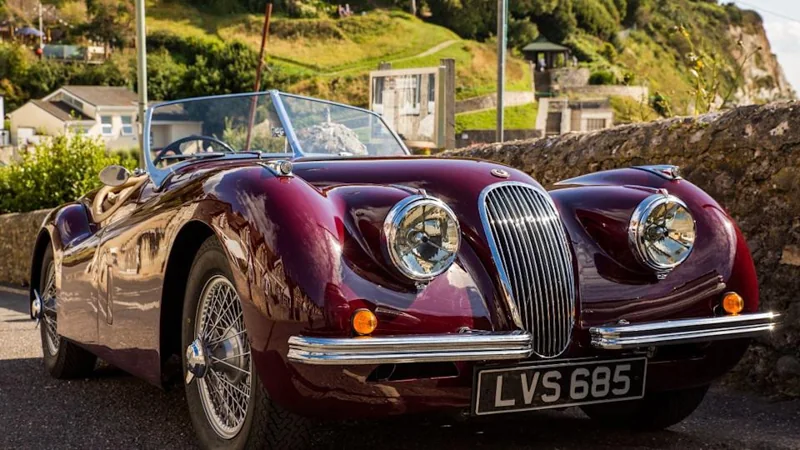
Most iconic cars have never just been machines. Long before anyone thought to slap a price tag on four wheels and a frame, artists were already obsessed with them — painting them, sculpting them, wrapping them in concrete, and using them to say something about the world. If you’ve ever looked at a gleaming luxury vehicle and thought “that’s a piece of art,” you’re not wrong, and you’re not alone. Some of the greatest names in art history felt exactly the same way. At Windy City Limousine Chicago, we believe that truly great cars deserve to be experienced, not just admired — and this piece is a celebration of both.
The Connection Between Cars and Fine Art
The relationship between automobiles and artistic expression goes back further than most people realize. As soon as the motor car became part of everyday life in the early 20th century, artists started paying attention. To some, the car represented danger and speed. To others, it symbolized freedom, modernity, or the relentless march of industrialization. Either way, it found its way onto canvases, into sculptures, and eventually onto the cars themselves.
What makes this connection so lasting is that it was never one-dimensional. The most iconic cars in art weren’t just props — they became the message.
Andy Warhol and the Mercedes-Benz Series
You can’t talk about cars in pop art without mentioning Andy Warhol. The man who turned Campbell’s soup cans and Marilyn Monroe into cultural monuments didn’t drive, yet he had a genuine fascination with cars. In 1986, Mercedes-Benz commissioned him to create a series of paintings, silk screens, and drawings tracing the evolution of their vehicles — 80 pieces in total, though Warhol completed 49 before his death in 1987.
Done in his signature silkscreen style, the works reproduced photographs of vehicles in flat, bold, layered color — very much a Warhol signature. The series has only been exhibited in full three times: in 1988, 2010, and 2014. It now lives in the Daimler Art Collection and remains one of the most celebrated examples of automotive art in history.
Wolf Vostell’s Concrete Traffic
In 1970, German artist Wolf Vostell took a Cadillac and encased it entirely in concrete in a public parking lot in Chicago. That was it. That was the art. Commissioned by the Chicago Museum of Contemporary Art, “Concrete Traffic” was Vostell’s commentary on urban congestion and the way modern infrastructure both shapes and suffocates city life.
What made the piece so striking was that the process of making it was just as much a part of the artwork as the finished object. Vostell called it an “instant happening.” The car sat in the parking lot long enough to rack up a stack of tickets before being moved. It eventually found a permanent home at the University of Chicago, where it still sits in the main parking garage — arguably the most thought-provoking thing in any parking structure anywhere.
Birgit Kinder’s Trabi: A Wall, a Car, and a Nation
If you’ve ever visited Berlin’s East Side Gallery, you’ve likely stopped in front of Birgit Kinder’s “Trabi” — a painting of a Trabant crashing through the Berlin Wall, painted directly on a preserved section of the wall itself. The first version was completed in 1990, just after reunification, and it immediately became one of the most recognized images of modern German history.
The Trabant was the car of East Germany — mass-produced, underpowered, and deeply symbolic of life under the socialist state. Using it as the vehicle literally breaking through the wall was a stroke of genius. It said something about freedom, about movement, and about the complicated legacy of everything that came before. The mural is a must-see for anyone visiting Berlin, and it proves that iconic vehicles don’t need to be expensive to carry enormous weight.
Salvador Dali and the Car as Surrealist Canvas
Salvador Dali rarely drove. That didn’t stop him from making cars one of the recurring symbols in his work. In his “Clothed Automobiles” collages, he dressed Cadillacs in fine fabrics. For his installation “Rainy Taxi,” he placed two mannequins in a car alongside lettuce, chicory, and live snails, then ran a series of interior pipes to make it rain inside the vehicle, while placing a full-size bronze statue where the hood ornament would normally go.
At one point, he borrowed a friend’s Rolls Royce to attend a lecture at the Sorbonne and filled the interior completely with cauliflower. Why? To Dali, the car was a symbol of modernization and progress — and he treated it the way he treated all modern symbols: with fascination, absurdity, and the kind of layered meaning that takes years to fully unpack.
BMW Art Cars: When the Vehicle Becomes the Gallery
The BMW Art Car project is one of the most sustained collaborations between the automotive industry and the fine art world. It began in 1975 when BMW started commissioning well-known artists to transform their vehicles into rolling works of art. Roy Lichtenstein did one. Andy Warhol did one. The project has continued for decades.
The 2024 additions brought fresh energy: Ethiopian-American artist Julie Mehretu’s bespoke M Hybrid V8 made its debut at an exhibition in Paris before racing at the Le Mans 24 Hours, while South African artist Esther Mahlangu returned to create the i5 Flow Nostokana, featuring electronically animated panels. These aren’t static works. They move, they race, they exist at the intersection of luxury automotive design and living art.
Giacomo Balla and the Futurist Obsession With Speed
The Italian Futurist movement was, at its core, in love with speed. And no object symbolized speed in the early 20th century quite like the automobile. Giacomo Balla, one of the movement’s key figures, wasn’t interested in painting what a car looked like — he wanted to paint what it felt like to be moving fast.
Works like “Velocity of Cars and Light” and “Rhythm + Noise + Car Speed” attempted to translate motion, noise, and velocity into abstract visual language. Looking at them today, there’s an undeniable energy that still comes through. Balla’s Futurist paintings remain among the most distinctive examples of cars as artistic inspiration, even if the political associations of the movement have cast a long shadow over its legacy.
Roy Lichtenstein’s “In the Car”
Roy Lichtenstein’s contribution to automotive art didn’t end with the BMW Art Car he painted. His 1963 work “In the Car” is one of his most recognizable paintings. Reproduced from a panel in a romance comic called “Girls’ Romances,” it shows two people confined within the frame of a car interior — expressions tense, the relationship between them left deliberately unclear.
Lichtenstein stripped out the original comic’s caption, choosing instead to let the image speak on its own terms. The result is a painting that works as both pop art commentary on American culture and a genuine study in emotional ambiguity. In 2005, it sold for $16.2 million, a record for his work at the time.
What Truly Iconic Cars Teach Us About Luxury
Across all these works, a theme emerges: iconic cars carry meaning beyond their function. Whether encased in concrete, painted in Warhol’s pop palette, or crashing through history on the Berlin Wall, these vehicles all said something about the world they came from. The best luxury vehicles do the same. They’re not just transportation — they’re a statement about the experience of travel itself.
That’s a philosophy at the heart of what Windy City Limousine Chicago offers. Whether you’re riding in a Lincoln Continental, a Cadillac XTS, a Cadillac Escalade, a Lincoln Navigator, or a Mercedes-Benz Sprinter Van, every vehicle in our fleet is chosen and maintained to deliver something that goes beyond getting from A to B. Our professional chauffeurs serve clients across Chicago, O’Hare, Midway, Highland Park, Lake Forest, Deerfield, Hinsdale, Northbrook, and beyond — available 24/7 for airport transfers, corporate travel, special events, and private city tours.
When you book a ride with us, you’re not just reserving a car. You’re choosing an experience — one that some of the world’s greatest artists would have recognized instantly.
Make your reservation at windycitylimousinechicago.
Frequently Asked Questions
1. What are the most iconic cars featured in fine art history? Among the most celebrated are Andy Warhol’s Mercedes-Benz series, Wolf Vostell’s “Concrete Traffic” (a Cadillac encased in concrete), Birgit Kinder’s Trabant mural on the Berlin Wall, and Roy Lichtenstein’s “In the Car.” Each work used the automobile as artistic subject matter in a way that still resonates today.
2. Why did artists like Warhol and Dali use cars in their work? To artists of the 20th century, the car represented modernity, consumerism, freedom, and industrial progress all at once. It was one of the defining objects of contemporary life, which made it irresistible as a symbol in fine art and pop culture.
3. What is the BMW Art Car project? The BMW Art Car project began in 1975 and involves commissioning globally recognized artists to redesign BMW vehicles as rolling works of art. The collection spans decades and includes work by Andy Warhol, Roy Lichtenstein, and more recently Julie Mehretu and Esther Mahlangu.
4. Where can you see the “Concrete Traffic” sculpture today? Wolf Vostell’s “Concrete Traffic” — a Cadillac permanently encased in concrete — is on display at the University of Chicago’s main parking garage. It’s one of the most unusual pieces of public art in the city.
5. What does Birgit Kinder’s Trabi painting represent? Kinder’s mural depicts a Trabant breaking through the Berlin Wall, symbolizing reunification and the end of the East German state. It’s painted on a preserved section of the wall at Berlin’s East Side Gallery and remains one of the most visited pieces of public art in Europe.
6. Is there a connection between luxury car culture and fine art today? Absolutely. Luxury automotive design draws heavily on the same principles as fine art — proportion, material quality, emotional impact, and attention to detail. High-end vehicles like the Cadillac Escalade and Lincoln Navigator are designed to be appreciated visually as much as functionally.
7. What luxury vehicles does Windy City Limousine Chicago operate? The fleet includes the Lincoln Continental, Cadillac XTS, Cadillac Escalade, Lincoln Navigator, and Mercedes-Benz Sprinter Van — covering everything from intimate airport transfers to large group travel across Chicago and its suburbs.
8. Can I book a luxury chauffeur for a special event in Chicago? Yes. Windy City Limousine Chicago provides premium chauffeur service for corporate events, weddings, VIP transfers, private city tours, and any occasion where the journey matters as much as the destination.
9. What areas does Windy City Limousine Chicago serve? Service areas include Chicago O’Hare, Midway, Highland Park, Lake Forest, Deerfield, Hinsdale, Northbrook, and the broader Chicago metro region. Airport transfers with real-time flight tracking are available 24/7.
10. How do I book a ride with Windy City Limousine Chicago? You can book online at windycitylimousinechicago. Choose your vehicle, enter your pickup location and travel time, and confirm your reservation.