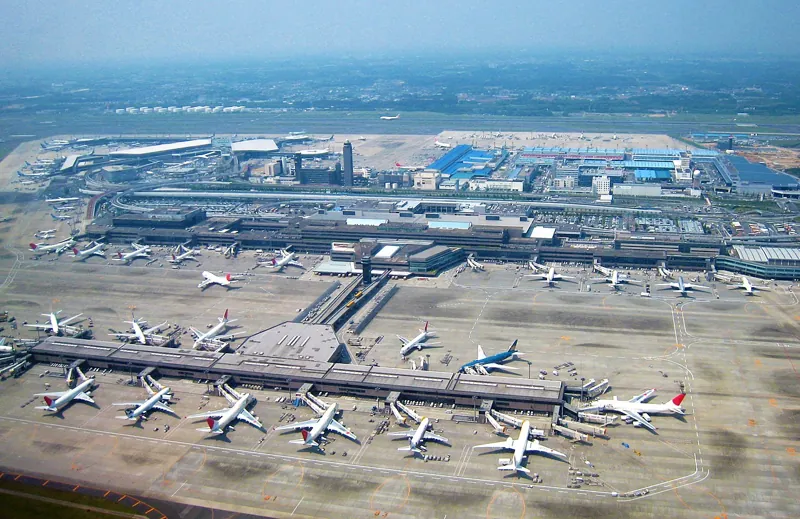
The Guide to Narita Airport you need before your next Japan trip starts right here. Tokyo Narita International Airport — officially known as Narita International Airport (IATA: NRT) — is one of Asia’s busiest and most well-organized international hubs, handling around 42 million passengers every year. Whether you’re arriving in Japan for the first time, transiting on a long-haul connection, or heading home after an unforgettable trip, knowing how Narita works before you arrive makes everything easier. For travelers who want their ground transportation locked in before they land, Windy City Limousine Chicago offers premium luxury airport transfer services with professional chauffeurs available around the clock — because a trip to Japan deserves a seamless, stress-free start. Book your reservation here.
Narita Airport at a Glance
Narita International Airport was developed in the 1960s as a direct response to the growing noise impact of Haneda Airport on Tokyo’s residents. What began as a relief valve for a single city has since grown into one of the most important international airports in Japan, handling the vast majority of the country’s overseas air traffic.
NRT operates three terminals, each organized around the world’s major airline alliances — a smart design that makes it far easier to know where you’re going before you arrive. The airport is also sometimes referred to as Tokyo Airport or Japan International Airport, so don’t be thrown off if you see those names on older signage or travel documents.
Getting to and from Narita Airport
No Guide to Narita Airport is complete without a clear picture of your transport options, because NRT sits a significant distance from central Tokyo — roughly 60 to 70 kilometers depending on your destination in the city.
Narita Express (N’EX) — The fastest and most comfortable public transport link between the airport and Tokyo. The N’EX runs directly to Shinjuku, Shibuya, Ikebukuro, and Yokohama, with journey times to Tokyo Station of around 53 minutes. It’s reliable, punctual, and runs frequently throughout the day.
Keisei Skyliner — A popular alternative that connects Narita directly to Ueno and Nippori stations in under 45 minutes. Slightly cheaper than the N’EX and equally fast for travelers staying in east or central Tokyo.
Highway Buses — Multiple bus companies operate routes between Narita and major Tokyo neighborhoods, hotels, and transportation hubs. Journey times vary from 60 to 90 minutes depending on traffic but it’s a cost-effective choice if you’re not in a rush.
Taxis and Ride Services — Standard taxis are available outside all terminals but fares to central Tokyo can be steep, often exceeding ¥20,000–30,000 JPY. Worth it for small groups splitting the cost, less so for solo travelers.
Luxury Chauffeur Service — For business travelers, families, and anyone who simply wants to arrive in comfort without navigating foreign public transport systems, a private airport transfer is the superior option. Windy City Limousine Chicago provides professional chauffeur-driven transfers with real-time flight tracking, door-to-door service, and a premium fleet including executive sedans, Cadillac Escalades, Lincoln Navigators, and Mercedes-Benz Sprinter vans for groups. Reserve your chauffeur here.
Narita Airport Terminal Overview
Understanding the terminal layout is one of the most practical things this Guide to Narita Airport can give you, because the three terminals serve very different airlines and are not always adjacent.
Terminal 1 is divided into two wings. The North Wing handles SkyTeam carriers and the South Wing is dedicated to Star Alliance airlines. Terminal 1 is the largest of the three and covers a broad range of international routes.
Terminal 2 is home to oneworld alliance airlines, including Japan Airlines, British Airways, American Airlines, Cathay Pacific, Qantas, and Qatar Airways, among many others. It also hosts several major non-alliance carriers like Emirates, Air India, and Hainan Airlines.
Terminal 3 is a more compact, low-cost carrier terminal, handling budget airlines including Jeju Air, JetStar Airways, JetStar Japan, Spring Japan, and Vanilla Air.
Shuttle buses connect all three terminals, and it’s worth knowing your terminal before you arrive so you’re heading in the right direction from the start.
Airlines Flying from Narita Airport
Here’s a clear breakdown of which airlines operate from each terminal, organized by alliance.
Terminal 1 — North Wing (SkyTeam): Air France, KLM, Delta Airlines, Korean Air, China Southern Airlines, Garuda Indonesia, Etihad Airways, Vietnam Airlines, Alitalia, AeroMexico, and others.
Terminal 1 — South Wing (Star Alliance): ANA All Nippon Airways, Air Canada, Air China, Lufthansa, Singapore Airlines, United Airlines, Turkish Airlines, Swiss International Airlines, Thai Airways, Asiana Airlines, Austrian Airlines, LOT Polish Airlines, Air New Zealand, SAS, and others.
Terminal 2 (oneworld and others): Japan Airlines, British Airways, American Airlines, Cathay Pacific, Qantas, Qatar Airways, Finnair, Iberia, Emirates, Air India, China Airlines, Malaysia Airlines, China Eastern Airlines, Hainan Airlines, Hawaiian Airlines, Philippine Airlines, LATAM Brasil, LATAM Chile, and more.
Terminal 3 (Low-Cost Carriers): Jeju Air, JetStar Airways, JetStar Japan, Spring Japan, Vanilla Air.
Lounges at Narita International Airport — Where to Relax Before You Fly
The airport lounges at Narita are genuinely impressive, covering everything from high-end first class sanctuaries to accessible pay-entry options. Here’s what’s available across both main terminals.
Terminal 1 Lounges
ANA Suite Lounge is among the finest business class lounges in Japan. Designed for ANA and Star Alliance first-class passengers, it greets guests with a cold towel and a welcome drink on arrival. Well-equipped work cubicles, shower facilities, a cold buffet, a self-serve bar, and an excellent made-to-order noodle bar all make this one of the standout lounge experiences at NRT.
ANA Lounge is the business-class counterpart, also open to Star Alliance Gold members. Semi-private seating areas give it a quieter feel than a standard open lounge. Made-to-order noodle dishes, cold buffet options, a sake bar, massage chairs, shower suites, daybeds, and work cubicles are all available. A smoking room is also provided.
Korean Air Lounge is open to first and business class passengers across all SkyTeam airlines, plus Priority Pass members. The lounge has a dedicated first-class section with more comfortable seating. Food is mainly pre-packaged snacks and sandwiches, making it more of a rest stop than a dining destination.
Delta Sky Club provides a solid option for Delta premium passengers, SkyTeam international premium travelers, Delta Sky Club members, and American Express Platinum cardholders with same-day international boarding passes. Shower facilities, computer workstations, excellent tarmac views, and a hot and cold buffet with both Western and Japanese choices make this a well-rounded choice.
United Club is a spacious lounge with natural light and runway views throughout. United Club and Star Alliance members with same-day boarding passes have access here, along with a business center offering workstations, semi-private cubicles, and private phone rooms. The buffet leans Western with some sushi available.
Narita Premier Lounge is operated by the airport itself and is open to business-class passengers from a wide range of international airlines. What makes it stand out is its traditional Japanese tea room — a rare and genuinely calming touch in an airport setting. Shower facilities and halal meal options are also available on request.
Terminal 2 Lounges
American Airlines Admirals Club is open to Admirals Club members, oneworld business-class travelers, and oneworld Sapphire and Emerald members. Dining tables, semi-private workstations, a hot and cold buffet, self-serve bar, espresso machine, and shower suites are all available.
Emirates Lounge holds a special distinction as Emirates’ first-ever Asian airport lounge. Open to Emirates first and business class passengers, it offers exemplary service, excellent sushi, a varied hot and cold buffet, a dedicated dining area, a small business center, and shower suites.
Qantas Lounge provides shower suites and several iMac computers alongside a primarily cold buffet with limited hot options. It’s a clean, functional lounge that serves its purpose well for long-haul travelers.
Cathay Pacific Lounge is open to Cathay Pacific and oneworld premium travelers, oneworld Sapphire members, and Marco Polo Club members with Silver status or above. Eight partitioned individual workstations, innovative sandwiches, sushi, noodle dishes, and a self-serve bar are the main draws.
Japan Airlines First Class Lounge is one of the largest and most impressive premium airport lounges at Narita. Wrap-around windows offer expansive views. A dedicated smoking room, business center with individual work desks, massage chairs and shower suites (both by reservation), and multiple buffets featuring sushi, sake, hot and cold dishes, and self-serve liquor — all beautifully presented. A sushi chef is on duty through most of the day, which is exceptional for an airport lounge.
Japan Airlines Sakura Lounge covers two full stories and handles business-class oneworld passengers. It tends to be busy, particularly in the workstation areas. A full-service wine bar, coffee bar, multiple hot and cold Japanese and Western buffets, nap rooms with daybeds, and shower suites make it a highly functional lounge despite the crowds.
China Airlines Dynasty Lounge is a quieter option with computer access and a separate area for Emerald and Paragon members. Food options are mainly pre-packaged, making it a better choice for rest than dining.
Hotels Near Narita Airport — Where to Stay on a Long Layover
NRT has an on-site capsule hotel called Nine Hours, where guests can check in at any hour and use showers on demand. Nap rooms are also available by the hour inside the terminals. For travelers needing a longer rest, these hotels are all within easy reach of the airport.
Radisson Hotel Narita sits just a few miles from the airport and is a strong all-rounder with indoor and outdoor pools, a fitness club with tennis courts and a putting green, three on-site restaurants, and dedicated meeting space for corporate travelers.
Hilton Narita offers spacious rooms, many with expansive views. The hotel has multiple function rooms, three in-house restaurants, a 24/7 fitness center, and an indoor pool. It’s a reliable, high-quality choice for both leisure and business travelers.
ANA Crowne Plaza Narita provides well-appointed rooms with tea makers and minibars, a 24/7 fitness center, tennis courts, massage services, and three restaurants with a mix of Western and Japanese menus. Breakfast is included with the room rate, making it particularly good value.
Shopping at Narita International Airport
Narita is genuinely one of the better airports in Asia for duty-free and retail shopping, with each terminal offering a distinct flavor of experience.
Terminal 1 leans heavily into Japanese brands and exclusives. Lowry’s Farm carries Japan’s latest fashion trends, Graniph offers graphic tees, and ABC-Mart handles footwear. For food gifts, Kuzefuku stocks everything you need for an authentic Japanese meal at home, Ginza Akebono has exceptional rice crackers, and Tokyo Shokuhinhan Omotasedokoro carries exclusive Kit-Kat flavors — including melon and mascarpone — that genuinely can’t be found outside the airport. Fa-So-La duty-free stores cover cosmetics, fragrances, liquor, and tobacco.
Terminal 2 is home to some excellent fashion and gift options. United Arrows stocks airport-exclusive clothing, Itoya offers specialty stationery and pens, Fukujuen carries premium matcha tea, and the Pokémon Store sells branded and limited-edition merchandise that’s hard to resist. Air Bic Camera covers all your electronics and camera needs, and Plaza handles cosmetics and accessories.
Terminal 3 has a more limited retail offering, but Fa-So-La Books covers reading material, Lawson handles convenience items, and Souvenir Akihabara has interesting Japanese art, sunglasses, and watches as gifts.
Dining at Narita Airport — Where to Eat at NRT
The restaurants at Narita Airport are a real highlight — particularly for travelers who want to eat well before a long flight rather than settling for whatever’s on board.
Terminal 1
Sushi Yuraku does table-service, made-to-order sushi from a small snack to a full meal. Tomita ramen is so popular there’s often a queue outside — worth every minute. Gihey specializes in sukiyaki, tempura, and rice dishes. Tang Dynasty Toshomen covers Chinese food and dim sum. Keisei Yuzen is the family-friendly option where the menu covers sushi, yakitori, and fried dishes. Kineya Mugimaru is a customizable udon spot where you pick your portion and toppings. Nanosato is the airport staff favorite — always a good sign for quality homestyle cooking.
Terminal 2
Sushiden serves fresh, made-to-order sushi. Tentei specializes in fresh tempura and offers halal meal options. Menya Kuukai is a Tokyo ramen institution with everything made fresh to order. Sanbei does traditional Kansai-style udon in a fragrant bonito and kelp broth. Tonkatsu Inaba Wako offers free refills on rice, cabbage, and miso soup with your tonkatsu. Obon de Gohan lets you build your own plate from 20 main dishes. Takopon serves genuine Osaka takoyaki with a full bar alongside. And for something familiar, the Japanese McDonald’s menu includes items like the shrimp filet-o that simply don’t exist anywhere else.
Terminal 3
Botejyu Yatai specializes in yakisoba on a hibachi grill, with the omusoba as the must-order dish. Miyatake Sanuki Udon is a fast food udon spot with excellent toppings. Tatsu Sushi is the go-to grab-and-go sushi choice. Freshness Burger is worth a try just for the pumpkin bun option. Caffe Bene is the only Japanese outpost of the popular Korean coffee brand — a great pick for high-quality coffee and pastries on the go.
The Best Way to Travel to and from Narita Airport
Everything covered in this Guide to Narita Airport points to one truth — Narita is a large, complex, world-class airport, and the smoother your ground transportation, the better your entire trip begins or ends. Trains are fast and buses are affordable, but when you want comfort, reliability, and zero uncertainty from the moment you land, a luxury private airport transfer is the clear choice.
Windy City Limousine Chicago provides premium chauffeur-driven airport transfers with real-time flight tracking, professional drivers, and a full luxury fleet. Whether you’re traveling solo, with a partner, or as part of a corporate group, there’s a vehicle and a service level that fits. Executive sedans, Cadillac Escalades, Lincoln Navigators, and Mercedes-Benz Sprinter vans are all available.
No apps to figure out. No language barriers at a taxi stand. No waiting around after a 12-hour flight. Just a professional, punctual chauffeur ready when you are.
Make your reservation now and let your Narita experience begin the right way.
Frequently Asked Questions About Narita Airport
1. What is the IATA code for Narita International Airport? The IATA code for Narita International Airport is NRT. It is sometimes referred to as Tokyo Narita Airport or Japan International Airport, though the official name is simply Narita International Airport.
2. How many terminals does Narita Airport have? Narita Airport has three terminals. Terminal 1 is divided into a North Wing (SkyTeam) and South Wing (Star Alliance). Terminal 2 handles oneworld alliance airlines and several independent carriers. Terminal 3 is a compact terminal for low-cost carriers. Free shuttle buses connect all three.
3. How far is Narita Airport from Tokyo city center? Narita Airport is approximately 60 to 70 kilometers from central Tokyo, depending on your destination. The Narita Express (N’EX) reaches Tokyo Station in around 53 minutes, while the Keisei Skyliner reaches Ueno in under 45 minutes. For door-to-door comfort, a private airport chauffeur service is also available.
4. Which airlines fly from Terminal 2 at Narita Airport? Terminal 2 is the home of oneworld alliance airlines including Japan Airlines, British Airways, American Airlines, Cathay Pacific, Qantas, Qatar Airways, and Finnair. Non-alliance carriers such as Emirates, Air India, Hainan Airlines, China Eastern, and Malaysia Airlines also operate from T2.
5. What is the best lounge at Narita Airport? Several lounges stand out for different reasons. The Japan Airlines First Class Lounge in T2 is widely regarded as one of the best, with a live sushi chef, sake bar, and stunning views. The ANA Suite Lounge in T1 is exceptional for Star Alliance first-class passengers. The Emirates Lounge in T2 — the airline’s first in Asia — is also highly regarded for its service and food quality.
6. Is there a hotel inside Narita Airport? Yes. The Nine Hours capsule hotel operates inside the airport with 24-hour check-in availability and on-demand shower access. Hourly nap rooms are also available inside the terminals for travelers needing a short rest between connections.
7. Can I book a luxury chauffeur or private transfer from Narita Airport? Absolutely. Windy City Limousine Chicago provides professional private airport transfer services with real-time flight tracking and a full luxury fleet. It’s the ideal solution for business travelers, VIP passengers, and anyone who values a comfortable, reliable start to their journey.
8. What are the best restaurants at Narita Airport? Top picks include Tomita ramen (T1) — often with a queue, always worth it — Sushi Yuraku (T1) for made-to-order fresh sushi, Menya Kuukai (T2) for Tokyo-style ramen, and Takopon (T2) for genuine Osaka takoyaki. The Japanese McDonald’s in T2 is also worth a visit for its Japan-exclusive menu items.
9. What unique shopping can I find at Narita Airport? Narita has a strong selection of airport exclusives. Tokyo Shokuhinhan Omotasedokoro in T1 sells Kit-Kat flavors — including melon and mascarpone — available nowhere else. United Arrows in T2 stocks clothing sold only at the airport. The Pokémon Store in T2 carries limited-edition merchandise, and Fa-So-La duty-free stores are found in every terminal for fragrances, cosmetics, tobacco, and liquor.
10. Do I need Priority Pass to access lounges at Narita Airport? Priority Pass gives access to a small number of lounges at NRT, including the Korean Air Lounge in T1. Most premium lounges at Narita — including the ANA, JAL, Cathay Pacific, and Emirates lounges — require a qualifying airline ticket or alliance membership. Day passes may be available for select lounges depending on availability.