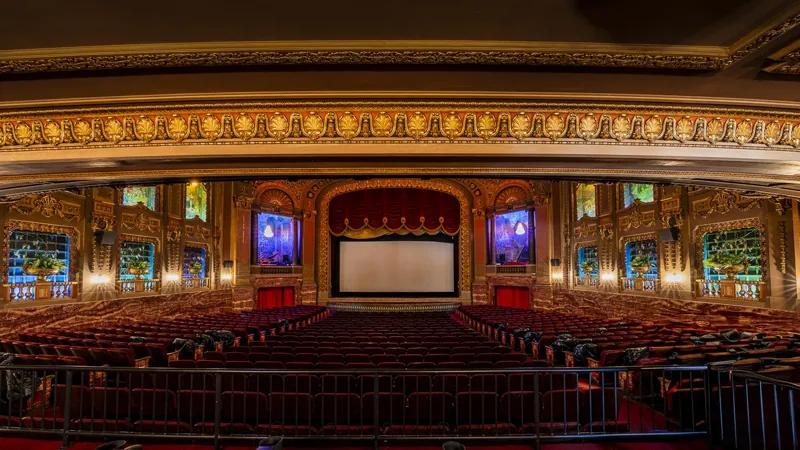
Famous theaters have a way of making a performance feel like something more than just a night out. The building itself becomes part of the experience — the history embedded in the walls, the architecture that frames the stage, the knowledge that generations of audiences sat in those same seats and felt the same anticipation before the curtain rose. If you’re the kind of traveler who plans trips around cultural experiences rather than just sightseeing, this list was written for you. At Windy City Limousine Chicago, we regularly transport theater lovers, opera enthusiasts, and performing arts travelers to and from Chicago’s airports — and we know firsthand that the best cultural journeys deserve seamless, comfortable transportation from the very first mile.
Here are six of the world’s most famous theaters that are genuinely worth building a trip around.
What Makes a Theater Truly World-Class?
Not every grand building earns the title. The world’s most iconic performance venues share a combination of qualities that go beyond size or age: exceptional acoustics, architectural significance, a repertoire that attracts the finest performers, and a history that gives every performance additional weight. The six famous theaters below tick every one of those boxes — and visiting any of them in person is a genuinely different experience from watching a recording at home, no matter how good your speakers are.
The Globe Theatre, London — Where Shakespeare Still Lives
There are few historic theaters in the world with a story as rich or as improbable as The Globe Theatre in London. The original was built in 1599 by William Shakespeare’s own playing company on the south bank of the Thames — at the time, it was the largest and most remarkable Elizabethan theater in the city. The tiered upper galleries seated the wealthier audience members, while the open-air pit in the center offered standing admission for just a penny, making it one of the first genuinely popular entertainment venues in history.
The original Globe didn’t survive. A misfired prop cannon set the thatched roof ablaze in 1613, and although the building was quickly rebuilt, it met its final end in 1644 when the Puritans, who viewed theater as a morally corrupting influence, ordered it demolished. The modern Globe Theatre that stands today is the result of decades of effort by American actor Sam Wanamaker, who established the Shakespeare Globe Playhouse Trust and led the reconstruction project. The rebuilt theater opened in 1997, designed as faithfully as possible to the original Elizabethan model — exposed timber frame, thatched roof, open sky above the pit.
Watching Shakespeare performed here, outdoors, in a space that operates exactly as it did four centuries ago, is one of the most authentic theater experiences available anywhere in the world. The seasonal program focuses on Shakespeare’s works, with occasional other Elizabethan-era plays filling out the calendar.
Bolshoi Theatre, Moscow — Imperial Grandeur on Stage
The Bolshoi Theatre is one of Russia’s most recognizable cultural symbols — its neoclassical facade with towering columns appears on the Russian 100-ruble note, which tells you something about its national significance. The theater holds 2,153 spectators and has been the home of some of the most celebrated classical ballet and opera performances in history.
Its origins date to 1780, though the road to opening night was rocky — near-bankruptcy, fire, and considerable political turbulence all played a role in the early years. The building that stands today is the product of multiple reconstructions, the most recent being a major restoration from 2005 to 2011 that brought the Bolshoi’s Imperial-era interior back to its full glory after decades of gradual decline. The gilded boxes, the enormous chandelier, and the deep red interior create an atmosphere that feels genuinely unlike any other opera house in Europe.
The Bolshoi’s resident company of dancers, musicians, and actors is world-famous, and productions like Tchaikovsky’s Swan Lake and Sleeping Beauty performed here carry a weight and precision that’s difficult to find elsewhere. For lovers of classical Russian ballet, this is the definitive destination.
The Metropolitan Opera, New York — The Largest Opera House in the World
The Metropolitan Opera in New York City holds the distinction of being the largest opera house in the world, and its modernist design makes it visually unlike any of the ornate European houses it competes with in terms of prestige. Located within the Lincoln Center for the Performing Arts on Manhattan’s Upper West Side, the building was designed by architect Wallace Harrison — the same mind behind Rockefeller Center — and opened in its current form in 1966.
The Met’s origins go back further. It was founded in 1883 by a group of wealthy New York businessmen who wanted to challenge the dominance of the Academy of Arts, which at the time operated as a culturally exclusive institution for the city’s old-money aristocracy. The Metropolitan Opera was a deliberate statement that great opera performances should be available to a broader audience — and it was an immediate success, operating at near-maximum capacity for much of its first century.
Today, the Met’s seasonal program blends classic Italian and German opera with more experimental contemporary works. The building’s five arched windows looking out over Lincoln Center Plaza are one of the most recognizable architectural details in New York’s cultural landscape, and the interior — with its sweeping staircases and Marc Chagall murals in the lobby — is worth seeing even if you only catch a matinee.
The Hollywood Bowl, Los Angeles — The Greatest Outdoor Stage in America
The Hollywood Bowl occupies a unique position among the world’s famous theaters because it operates entirely outdoors, carved into a natural canyon in the Santa Monica Mountains. It is one of the largest natural outdoor amphitheaters in the world, with a capacity of nearly 18,000, and the acoustics produced by the surrounding bowl-shaped terrain are genuinely remarkable — sound travels up from the central stage and reverberates through the canyon walls in a way that no indoor venue can replicate.
The iconic shell structure over the stage was first erected in 1927 and was originally designed by Frank Lloyd Wright as a pyramid shape. The design was considered too radical for the audience of the time, and Wright redesigned it within a year into the series of concentric arches that give the Hollywood Bowl its now-iconic Art Deco appearance. The venue booked Frank Sinatra as its first pop act in 1943 and hosted The Beatles in 1964 for a live recorded performance that became a classic album.
Evening performances at the Hollywood Bowl are a specific kind of experience — the sun sets behind the stage as the music begins, the sky darkens, and the combination of the performance and the setting creates something that’s hard to put into words. The annual program includes the Los Angeles Philharmonic, a broad range of classical and pop acts, and regular fireworks concerts throughout the summer season.
Musikverein, Vienna — The Golden Hall That Defies Explanation
Vienna has produced more great composers than perhaps any other city in history — Mozart, Beethoven, Brahms, Schubert — and it’s only fitting that it should also be home to one of the world’s finest concert halls. The Musikverein’s Golden Hall is legendary among musicians and audiophiles for its acoustics, which are so extraordinary that no one has fully explained why the space sounds the way it does. The hall was designed by Danish architect Theophil Hansen and opened in 1870, and the acoustic properties were essentially accidental — the result of the room’s specific dimensions and the materials used in construction.
The interior is breathtaking. Painted ceilings depicting Apollo and the Nine Muses, fifty life-sized gilded statues of female figures lining the upper perimeter, elaborate carved ornamentation throughout — the Musikverein Golden Hall is as much a work of art as the music performed inside it. The Vienna Philharmonic performs here regularly, and the annual New Year’s Concert broadcast from this hall is one of the most-watched classical music events in the world.
In 2004, three additional concert halls were added beneath the building — named Glass, Metal, Stone, and Wood — designed to host more experimental and contemporary classical programming alongside the grand-scale performances in the main hall.
Sydney Opera House, Sydney — A UNESCO Masterpiece on the Water
The Sydney Opera House is one of the most instantly recognizable buildings on earth, and its architectural story is as dramatic as anything performed inside it. Danish architect Jørn Utzon won an international design competition in 1956 with plans for a structure of sculptural, interlocking shell-like roofs perched on a waterfront peninsula at Bennelong Point. The project was originally estimated to take four years and cost 7 million AUD. It took 14 years and cost 103 million AUD.
The result is a UNESCO World Heritage Site and one of the 20th century’s most significant architectural achievements. The building houses multiple performance spaces, including the Concert Hall, the Opera Theatre, the Drama Theatre, and the Studio, allowing the Sydney Opera House to run a genuinely diverse program that includes productions by Opera Australia, the Sydney Symphony Orchestra, and the Australian Ballet simultaneously.
Seeing a performance here at night, with the harbor lit up and the shells glowing against the dark water, is one of those travel experiences that stays with you permanently.
Travel to the World’s Greatest Stages in Style
Visiting any of the world’s famous theaters requires getting to the airport on time, arriving relaxed, and starting the journey the right way. For Chicago-area travelers heading to London, New York, Los Angeles, Vienna, Moscow, or Sydney, Windy City Limousine Chicago provides professional airport chauffeur service that takes care of the ground transportation so you can focus entirely on the experience ahead.
Our fleet covers every type of traveler. The Lincoln Continental and Cadillac XTS are ideal for solo travelers and couples. The Cadillac Escalade and Lincoln Navigator offer more space for families or those traveling with extra luggage. For groups heading to a performance or cultural event together, the Mercedes-Benz Sprinter Van accommodates up to 12 to 14 passengers comfortably. We serve O’Hare International Airport, Midway Airport, and all surrounding communities including Highland Park, Lake Forest, Deerfield, Hinsdale, and Northbrook — around the clock, every day.
Reserve your luxury airport transfer at windycitylimousinechicago.
Frequently Asked Questions
1. What are the most famous theaters in the world? The Globe Theatre in London, the Bolshoi Theatre in Moscow, the Metropolitan Opera in New York, the Hollywood Bowl in Los Angeles, the Musikverein in Vienna, and the Sydney Opera House are widely considered among the most iconic performance venues in the world, each combining architectural significance with world-class programming.
2. Which is the largest opera house in the world? The Metropolitan Opera in New York City is the largest opera house in the world by capacity and stage size. It is located within the Lincoln Center for the Performing Arts and hosts one of the most prestigious opera and classical music programs globally.
3. Why is the Globe Theatre in London significant? The Globe Theatre was originally founded in 1599 by William Shakespeare’s own theater company. The current building is a faithful 1997 reconstruction of the original Elizabethan playhouse and remains the best place in the world to experience Shakespeare’s works performed as they were intended.
4. What makes the Musikverein’s Golden Hall acoustics so special? The Musikverein Golden Hall in Vienna is widely regarded as having the finest acoustics of any concert hall in the world. The exact reasons for the sound quality remain partially unexplained, though the room’s dimensions, materials, and design all contribute to an acoustic environment that has never been fully replicated elsewhere.
5. Is the Hollywood Bowl indoor or outdoor? The Hollywood Bowl is a fully outdoor natural amphitheater set into the Hollywood Hills. It seats nearly 18,000 and is famous for its exceptional natural acoustics, its Art Deco shell stage, and its summer program featuring the Los Angeles Philharmonic and major pop and classical artists.
6. How long did the Sydney Opera House take to build? The Sydney Opera House took 14 years to complete, opening in 1973. Originally estimated at 7 million AUD over four years, the final cost reached 103 million AUD. It was designated a UNESCO World Heritage Site in 2007.
7. What kind of performances does the Bolshoi Theatre stage? The Bolshoi Theatre in Moscow is best known for its classical Russian ballet and opera productions. Its resident company is one of the most celebrated in the world, and productions of Tchaikovsky’s Swan Lake and Sleeping Beauty performed here are considered benchmark interpretations.
8. Can tourists visit these famous theaters without attending a performance? Most of the world’s famous theaters offer daytime tours for visitors. The Globe Theatre, Sydney Opera House, Metropolitan Opera, and Bolshoi Theatre all run regular behind-the-scenes guided tours that cover the history, architecture, and inner workings of the venues.
9. Which famous theater is best for a first-time opera experience? The Metropolitan Opera in New York is an excellent choice for first-time opera-goers, offering subtitles in multiple languages on the seat backs, a broad mix of classic and contemporary productions, and a welcoming atmosphere that doesn’t require prior opera knowledge to enjoy.
10. How can Chicago travelers get to the airport for international trips to these destinations? Windy City Limousine Chicago provides professional luxury chauffeur service to O’Hare and Midway airports from across the Chicago metro area, including Highland Park, Lake Forest, Deerfield, Hinsdale, and Northbrook. Book your reservation here.