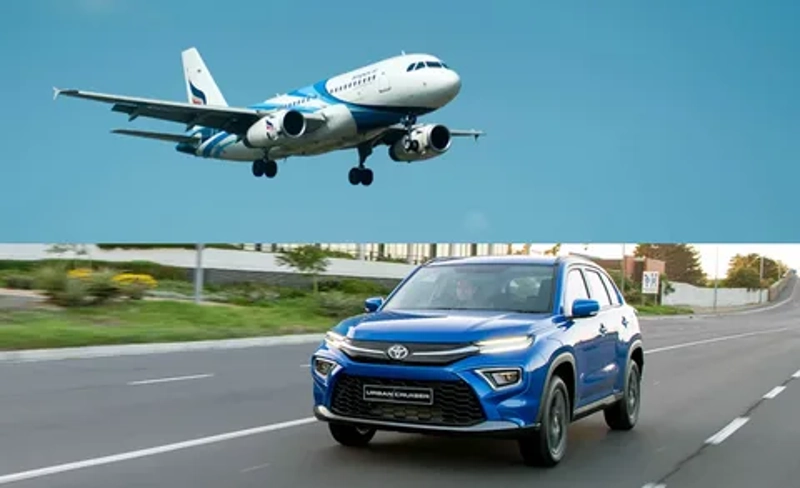
Flying vs driving a comprehensive travel comparison is a question every traveler eventually wrestles with — and the honest answer is that it depends on far more than just distance. Speed, cost, stress, family comfort, environmental impact — each one tips the scale differently depending on your situation. At Windy City Limousine Chicago, we see both types of travelers every single day: the executive rushing to O’Hare for a 7 a.m. flight and the family loading up for a long weekend road trip. Both have their logic. Both have their trade-offs. This guide breaks it all down so you can make the right call for your next journey.
Cost Comparison: Which Option Is Actually Cheaper?
Money is usually the first thing people look at, and flying vs driving a comprehensive travel comparison almost always starts here. The problem is that neither option is universally cheaper — the answer shifts based on distance, group size, and the hidden costs people tend to forget.
For short trips under 500 miles, driving is almost always the more budget-friendly choice, especially for groups. A 500-mile road trip with three passengers costs roughly $70 in gas and around $50 in tolls — that’s about $40 per person before food. A round-trip flight for the same distance, factoring in checked baggage fees ($25–$50 per bag), airport parking ($20–$40 per day), and transport to and from the terminal, will typically run $200 or more per person even on a budget carrier.
For solo travelers on longer distances over 500 miles, flying often wins on pure math. The cost per person on a domestic flight can approach what you’d spend on gas, tolls, and wear on your vehicle — but you arrive in a fraction of the time.
One cost people consistently overlook when driving: vehicle depreciation. A mid-size car loses roughly $0.10 per mile in depreciation alone. On a 1,000-mile round trip, that’s $100 you’re spending without ever seeing a receipt for it.
Score — Flying: 7/10 | Driving: 8/10
Environmental Impact: The Greener Choice Isn’t Always Obvious
The environmental impact of flying vs driving is genuinely complicated, and anyone who gives you a simple answer probably hasn’t looked closely enough.
Planes emit more CO2 per trip than cars in most scenarios — but the comparison shifts dramatically depending on how many people are in the vehicle. Research from the International Council on Clean Transportation shows that a fuel-efficient car carrying three or more passengers can have a lower carbon footprint per person than a plane covering the same route.
Short-haul flights are particularly hard on the environment because aircraft burn the most fuel during takeoff and landing. On a flight under 500 miles, a significant portion of the total fuel burned goes toward getting airborne and touching down — the efficient cruising phase is relatively brief. Long-haul flights even out somewhat because the aircraft spends more time at cruising altitude where fuel efficiency improves.
If you drive a hybrid or electric vehicle, the math shifts further in driving’s favor. An EV on a 300-mile trip produces a fraction of the emissions of even the most fuel-efficient commercial flight.
Score — Flying: 5/10 | Driving: 8/10
Safety: What the Statistics Actually Say
“Is flying safer than driving?” is one of the most searched travel questions online, and the data gives a clear answer: flying is statistically much safer.
A Harvard University study found that the odds of dying in a fatal aircraft accident in the U.S., Europe, or Australia are approximately 1 in 11 million. Commercial aviation has layers of redundancy, rigorous maintenance standards, and mandatory crew training that far exceed what any individual driver faces on a highway.
By contrast, the National Highway Traffic Safety Administration reports a fatality rate of around 1.35 deaths per 100 million miles traveled by car in the U.S. That sounds small in isolation, but scaled across the billions of miles driven annually, it adds up to tens of thousands of fatalities every year.
Driving feels safer to many people because of the sense of personal control — you’re the one holding the wheel. But that sense of control is partly an illusion. You can be the most careful driver on the road and still be at the mercy of distracted, impaired, or reckless drivers around you.
Score — Flying: 9/10 | Driving: 7/10
Convenience and Ease: Door-to-Door Reality Check
This is where flying vs driving a comprehensive travel comparison gets genuinely interesting, because the gap between perceived convenience and real-world convenience is larger than most people expect.
Flying sounds convenient — you board a plane, someone else handles the navigation, and you land at your destination. But the actual experience involves getting to the airport at least 90 minutes early (two hours for international), navigating security, finding your gate, boarding, waiting on the tarmac, deplaning, waiting for baggage, and then arranging ground transportation on the other end. For many trips, the airport experience adds two to four hours to your actual travel time.
Driving, on the other hand, starts at your front door. You leave when you’re ready, stop when you want, and arrive at your actual destination — not an airport that may be 45 minutes from where you actually need to be. The flexibility is real and meaningful.
That said, professional chauffeur service changes this equation significantly. When your ground transport is handled by a service like Windy City Limousine Chicago — with flight tracking, on-time pickups, and a professional driver who knows Chicago’s traffic patterns — the friction of getting to and from the airport drops considerably.
Score — Flying: 6/10 | Driving: 8/10
Speed and Time Efficiency: The Door-to-Door Truth
Cruising at 500 miles per hour sounds like an obvious win for flying. And on paper, it is. But door-to-door travel time tells a different story, particularly for regional trips.
A drive from Dallas to Oklahoma City takes roughly 186 minutes. The same trip by plane — factoring in check-in, security, boarding, the flight itself, deplaning, and ground transport — takes closer to 234 minutes. Charlotte to Raleigh runs 156 minutes by car versus 222 by plane. Seattle to Portland is 180 minutes driving versus 222 flying.
For trips under roughly 300 to 400 miles, driving frequently wins the door-to-door race. Flying’s speed advantage only becomes decisive on longer distances where the hours saved in the air outweigh the time lost in airports.
Score — Flying: 8/10 | Driving: 6/10
Traveling With Family: Who Has the Real Advantage?
If you’re traveling with young children, this category matters more than almost any other. And here, driving holds a significant edge for most families.
No liquid restrictions. No keeping kids buckled in a narrow seat during turbulence. No worrying about screens running out of battery before descent. In a car, you can pull over when someone needs a bathroom break, stop at a roadside diner, let the kids stretch at a rest area, or spontaneously take a detour when you pass something interesting. That kind of flexibility is simply not available at 35,000 feet.
The trade-off is fatigue. Long drives are tiring for the driver in a way that flying is not — you can read, nap, or work on a plane. Families tackling a 10-hour drive need to plan rest stops, share driving responsibilities, and manage energy carefully. For truly long family trips (over 700 miles), flying starts to look more attractive once you weigh the stress of the drive against the hassle of the airport.
Score — Flying: 6/10 | Driving: 8/10
The Experience Factor: Which Journey Do You Actually Enjoy?
Travel isn’t just logistics — it’s the experience itself. And road trips vs flights feel fundamentally different in ways that don’t show up in a cost spreadsheet.
Road trips have a quality that flying simply can’t replicate: the journey is part of the trip. You see the landscape change, discover unexpected towns, find roadside food that doesn’t exist anywhere else, and arrive at your destination with stories from the drive itself. For many travelers, especially families and friends, the road trip is the memory.
Flying has its own version of this — the ritual of airports, the view from the window seat at sunrise, the slight unreality of being suspended above the clouds. Some people genuinely love the airport experience, and modern terminals in major cities have become destinations in their own right with quality food, lounges, and shopping.
But on pure enjoyment, most travelers who aren’t flying somewhere extraordinary will tell you the road trip was more fun.
Score — Flying: 7/10 | Driving: 8/10
The Final Verdict
Adding up the scores across all seven categories: Flying totals 48/70. Driving totals 53/70.
For most short-to-medium distance trips, driving comes out ahead on cost, convenience, environmental impact, family comfort, and experience. Flying wins decisively on safety and retains an edge on pure speed for longer distances.
The smartest approach for most travelers? Drive when the distance makes sense, and when you do fly, make sure your ground experience is handled properly. That means not scrambling for a rideshare at the airport or fighting for parking — it means having a professional chauffeur service that makes both the departure and arrival seamless.
Book your airport transfer with Windy City Limousine Chicago and let the ground side of your journey match the standard you expect from the rest of it. Our fleet — including the Lincoln Continental, Cadillac XTS, Cadillac Escalade, Lincoln Navigator, and Mercedes-Benz Sprinter Van — is available 24/7 for airport transfers, corporate travel, and long-distance trips throughout Chicago and beyond.
10 Frequently Asked Questions: Flying Vs Driving
1. Is flying or driving cheaper for a family of four? For trips under 500 miles, driving is almost always cheaper for a family. When you factor in four airfares, checked baggage fees, and airport transport, road trip costs are typically a fraction of flying for groups.
2. At what distance does flying become faster than driving door-to-door? Most travel data suggests flying becomes faster door-to-door around 400 to 500 miles, when the time saved in the air starts to outweigh airport check-in, security, and ground transport time on both ends.
3. Is flying safer than driving? Yes, statistically. The odds of a fatal aircraft accident are approximately 1 in 11 million. Car travel fatality rates are significantly higher per mile traveled according to U.S. government safety data.
4. Which is better for the environment — flying or driving? It depends on the vehicle and group size. A fuel-efficient car with three or more passengers can have a lower carbon footprint per person than a commercial flight, especially on short routes where planes burn heavy fuel during takeoff and landing.
5. Is driving less stressful than flying? For most people, yes. Driving avoids airport security lines, rigid schedules, and the anxiety of missing a flight. However, long drives carry their own stress, particularly for solo drivers on unfamiliar routes.
6. When does flying make more sense than driving? Flying generally wins for solo travelers on long distances, for time-sensitive business trips, and for routes over 500 miles where the time saved in the air is substantial enough to justify the airport experience.
7. How do road trips compare to flights for family travel? Family road trips offer more flexibility — no liquid restrictions, freedom to stop as needed, and no keeping young children contained in a small seat. For distances under 400 miles, most families find driving less stressful overall.
8. Does driving or flying have a bigger carbon footprint? Short-haul flights typically have a higher carbon footprint per passenger than driving, especially in a group. Longer flights become more comparable to driving since planes reach cruising altitude where they burn fuel more efficiently.
9. What are the hidden costs of flying vs driving? Flying’s hidden costs include checked baggage fees, airport parking, ground transport on both ends, and food at the terminal. Driving’s hidden costs include vehicle depreciation, tolls, and accommodation if the drive requires an overnight stop.
10. How can a chauffeur service improve my airport travel experience? A professional airport chauffeur service like Windy City Limousine Chicago eliminates the stress of parking, traffic navigation, and flight timing. With real-time flight tracking and a professional driver, your ground transport becomes the seamless part of an otherwise unpredictable travel day.