Windy City Limousine Chicago clients are always asking us where the next big travel hotspot will be, and the honest answer right now is: wherever the new airports are. Global air travel is climbing fast, China alone is opening new airports at a remarkable pace, and the airports that are finishing construction in 2026 and beyond are some of the most ambitious aviation projects ever built. Whether you are flying out of O’Hare for a once-in-a-lifetime trip or just love tracking where the industry is headed, this guide breaks down every major new airport opening soon, plus the biggest airport expansion projects already reshaping how the world flies.
We have updated this guide with the latest 2026 timelines, because a lot has changed since these projects were first announced. Some airports that were once “coming soon” are now fully open and handling tens of millions of passengers a year. Others have shifted their opening dates by months or even years. Below, you will find a current, accurate look at the new international airports worth knowing about, along with the major renovations happening at airports you may already fly through.
Why the World Needs So Many New Airports
Air travel demand has been on a steady climb for years, and most forecasts still point toward passenger numbers roughly doubling within the next couple of decades. China has been adding new airports almost every year to keep pace with domestic and international demand, and similar pressure is showing up in the Middle East, Southeast Asia, Europe, and Australia. Older airports that were designed decades ago simply were not built to handle today’s traffic volumes, which is why so many cities are either building brand-new international airports from scratch or pouring billions into expanding the ones they already have.
A lot of this growth is being driven by the rise of the middle class across Asia, the Middle East, and parts of Latin America, where flying internationally used to be a luxury and is now becoming a routine part of life. Add in the boom in long-haul leisure travel, business travel bouncing back to pre-pandemic levels, and a growing number of “bleisure” trips that mix work with vacation, and it is easy to see why so many governments are treating airport infrastructure as a national priority rather than just a transportation project.
For travelers, this is mostly good news. New terminals tend to mean shorter walks, better technology, more direct routes, and airports that feel like part of the destination instead of just a waiting room before it. It also means more competition between cities to become the next major global travel hub, which usually translates into better service and more flight options for everyone. Cities that successfully position themselves as connecting hubs, the way Istanbul, Dubai, and Singapore already have, tend to see ripple effects across tourism, business investment, and even real estate values near the airport itself.
Future-Ready Design: How Airports Are Changing the Travel Experience
Modern airport design has moved well past rows of plastic chairs and fluorescent lighting. Architects are now designing terminals around natural light, indoor gardens, and layouts that reduce the stress of long walks between gates. Incheon International Airport in Seoul set the tone for this shift with its Terminal 2, which opened with soft natural lighting, manicured indoor gardens, and dining options built around the modern traveler rather than the standard fast-food lineup.
That same philosophy now shows up across nearly every major new airport project: living walls, indoor water features, lounges that feel more like boutique hotels, and smart technology that speeds up check-in, security, and boarding. Biometric e-gates, automated baggage drop, and app-based wayfinding are quickly becoming standard rather than a novelty, cutting down on the long lines that used to define the airport experience. Sustainability is another major theme, with new builds increasingly designed around rainwater capture, solar power, and energy-efficient climate control systems that reduce the environmental footprint of a building that, by nature, never really turns off.
Whether an airport is being built new or simply expanded, the goal is the same — make a massive, high-traffic space feel calm and easy to navigate. The airports that get this right tend to become destinations in their own right, the way Singapore’s Changi has, where travelers actually plan extra time before a flight just to enjoy the airport itself.
Brand-New Airports That Are Already Open
Istanbul Airport, Turkey
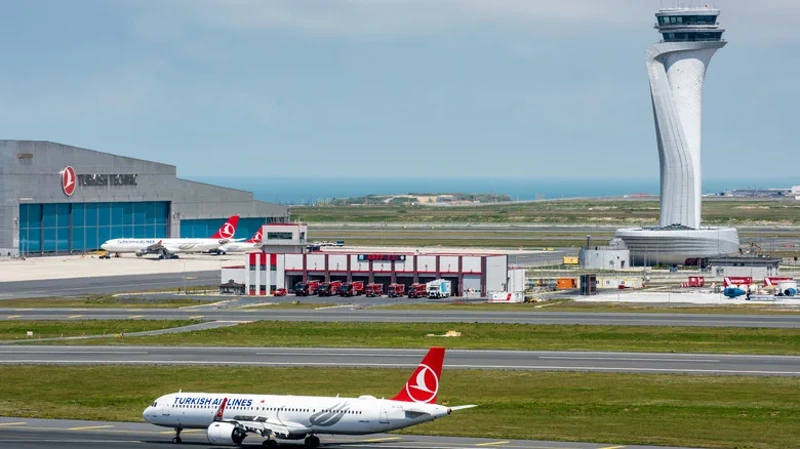
Istanbul Airport has gone from “newly opened” to one of the busiest hubs in the world. The airport is now fully operational around the clock, and Turkey’s aviation authority has set a target of close to 90 million passengers for 2026, supported by 116 scheduled airlines flying to more than 330 destinations. A fourth runway is on track to be finished by the end of August 2026, which is expected to push capacity even closer to the airport’s long-term target of around 120 million passengers a year.
The terminal’s design, by London-based architecture firm Grimshaw, leans into Turkish heritage with dome-style ceilings and a tulip-shaped control tower, since the tulip is Turkey’s national flower. Sustainability features include rainwater collection and a design that channels natural daylight deep into the terminal. Once every phase is finished, the surrounding “airport city” is planned to include offices, apartments, hotels, a medical center, and a shopping mall, alongside terminal perks like gaming arcades and interactive shopping displays.
Istanbul’s location, sitting at the crossroads of Europe, Asia, and the Middle East, has also made it an increasingly important transit point during periods of regional disruption, with the airport regularly absorbing rerouted traffic when nearby Gulf hubs face temporary restrictions. For travelers building a multi-stop international itinerary, Istanbul has quietly become one of the most reliable long-haul connecting points anywhere in the world.
Murcia-Corvera International Airport, Spain
Before Murcia-Corvera opened, travelers heading to the Spanish city of Murcia had to land at a military base with a small passenger terminal. Murcia-Corvera, located between Murcia and nearby Cartagena, now gives the region a proper civilian airport, with carriers including Jet2 and easyJet operating routes into the area.
Beijing Daxing International Airport, China
Beijing Daxing opened in 2019 with a striking, almost fluid-looking terminal designed by Zaha Hadid Architects, built so no traveler has to walk an excessive distance between check-in and gate. It now serves as the home base for both China Southern Airlines and China Eastern Airlines, and it has quickly become one of the key gateways for travelers heading into the Chinese capital, alongside more everyday conveniences like a pet hotel and an on-site daycare center. Beijing now effectively operates two major international gateways, with Daxing handling much of the growth in domestic and regional traffic that the older Beijing Capital Airport could no longer absorb on its own.
New Airports Opening Soon (2026 and Beyond)
Western Sydney International (Nancy-Bird Walton) Airport, Australia
This is one of the most exciting new airports to watch right now, because the opening date is finally locked in. Western Sydney International is set to welcome its first cargo flights on 27 July 2026 and its first passenger flights on 25 October 2026, with Jetstar flying the inaugural commercial service to the Gold Coast. The airport will operate 24 hours a day with no overnight curfew, unlike Sydney’s existing Kingsford Smith Airport, giving airlines far more flexibility on scheduling.
International service follows quickly after launch: Air New Zealand begins flights to Auckland the day after opening, and Singapore Airlines starts daily nonstop service to Singapore on 23 November 2026. The airport is designed to handle 10 million passengers a year at launch, with room to scale toward 82 million passengers over the long term, and it is expected to bring significant economic growth to the Badgerys Creek area west of Sydney.
Long Thanh International Airport, Vietnam
Long Thanh is being built to relieve Ho Chi Minh City’s congested Tan Son Nhat Airport, and the project reached a major milestone in December 2025 when an inaugural Vietnam Airlines flight touched down as part of the airport’s symbolic launch. Full commercial operations are now targeted for the fourth quarter of 2026, with Vietnam’s government pushing contractors to finish remaining terminal and systems work on an accelerated schedule.
The terminal design, created by South Korean firm Heerim Architects and Planners, features a distinctive lotus-shaped roofline and landscaped gardens between the building and the access road. Once fully built out, Long Thanh is planned to handle up to 100 million passengers and millions of tons of cargo each year, and it is expected to take over the large majority of Ho Chi Minh City’s international air traffic once it ramps up.
Navi Mumbai International Airport, India
Navi Mumbai International Airport is designed to take pressure off Mumbai’s existing Chhatrapati Shivaji Maharaj International Airport. The terminal, designed by Zaha Hadid Architects, is being built in phases, with the first phase targeting around 10 to 20 million passengers annually before later phases push capacity toward 60 million or more. The project has faced repeated delays tied to land acquisition and resettlement issues, so travelers should expect the opening timeline to keep shifting as construction progresses. Once operational, it is expected to give the Mumbai metropolitan area, already one of the busiest air travel markets in South Asia, badly needed breathing room for both passenger and cargo growth.
Berlin Brandenburg Airport, Germany
Berlin Brandenburg finally opened in 2020 after one of the most famously delayed airport projects in modern aviation history, originally planned for 2012. It now serves as Berlin’s primary international gateway, having replaced the city’s older Tegel and Schönefeld airports, and continues to expand its route network as demand for travel to the German capital grows. The years of delay were largely tied to fire safety and technical certification issues, which makes its eventual smooth operation something of a quiet success story in large-scale infrastructure projects.
Warsaw Central Polish Airport, Poland
Poland’s new mega-hub, planned for the town of Baranów around 40 kilometers from central Warsaw, is designed to handle roughly 45 million travelers a year once complete, with a fast rail link planned to connect the airport to the city center in about 15 minutes. The project remains a long-term build, reflecting Poland’s growing role as a connecting point between Western Europe, the Middle East, and Asia. As Polish carriers expand their long-haul networks, Warsaw is positioning itself to become a genuine alternative connecting hub alongside more established gateways like Frankfurt and Amsterdam.
Major Airport Expansion and Renovation Projects
Los Angeles International Airport (LAX)
LAX has completed major renovations to Terminal 1, including new common areas, automated baggage screening, and upgraded security checkpoints, along with newer self-service check-in kiosks in Terminal 6. The city’s Landside Access Modernization Program continues to roll out improvements aimed at reducing the traffic congestion LAX has long been known for.
Louis Armstrong New Orleans International Airport
New Orleans’ newer terminal replaced the airport’s older, more cramped facility with a single consolidated security checkpoint feeding into three concourses, rather than separate checkpoints for each one. The airy, window-filled design from Manning Architects, Pelli Clarke Pelli, and the Crescent City Aviation Team centers shops and restaurants around natural light and seating with views of the airfield.
LaGuardia Airport (LGA), New York
LaGuardia’s long-running rebuild has replaced the airport’s notoriously cramped, maze-like terminals with new concourses, far more natural light, an updated parking complex, and better connections to public transit. The project has dramatically improved an airport that, for years, ranked among the most frustrating in the country for travelers.
Pittsburgh International Airport
Pittsburgh has undergone a major renovation merging its airside and landside buildings into a single, more efficient terminal structure. The project was designed to make the airport more attractive to airlines and travelers again after it lost significant traffic following the American Airlines and US Airways merger.
Changi Airport, Singapore
Changi remains one of the most consistently top-ranked airports in the world, and it keeps raising its own bar. The Jewel Complex added a massive indoor waterfall, an amusement park, a hotel, and more than ten floors of shopping and dining, while the airport’s Terminal 5 expansion is being built as part of the larger Changi East project, ultimately designed to add capacity for more than 150 million travelers a year. The project also includes new underground tunnel systems, expanded cargo facilities, and additional runway infrastructure, reflecting just how far ahead Singapore is planning its aviation growth.
Hamad International Airport, Doha
Qatar’s Hamad International has continued expanding its terminal footprint and retail offerings to keep pace with Doha’s role as a major long-haul connecting point between Europe, Asia, Africa, and the Americas. Ongoing upgrades to lounges, dining, and passenger processing reflect the broader trend among Gulf hubs of competing directly with Dubai and Istanbul for transit travelers.
Al Maktoum International Airport, Dubai
Dubai’s plans for Al Maktoum International remain some of the most ambitious in global aviation, with long-term plans to make it the largest airport in the world. The project has experienced delays over the years, but Dubai’s continued investment in the surrounding aviation district signals that the long-term vision is still very much alive.
Newark Liberty International Airport
Newark Liberty has undergone a substantial modernization, replacing its dated, dimly lit terminals with a brighter design featuring art installations, greenery, and a large new parking structure. The upgrade has helped the airport compete more directly with other major hubs serving the New York metro area.
Manchester Airport, United Kingdom
Manchester has been investing heavily in expansion to keep up with rising demand for long-haul routes, including the replacement of its older Terminal 2 with a significantly larger facility designed to support more international connections.
How This Affects Travelers Flying Through Chicago
If any of these destinations are on your travel list, getting to and from O’Hare or Midway smoothly matters just as much as the flight itself. Windy City Limousine Chicago provides reliable Chicago airport car service and luxury airport transportation for travelers heading out to explore these new international hubs, whether you are catching an early flight to a connecting gateway in Istanbul or heading out for a long-haul trip to Singapore or Sydney. A professional Chicago chauffeur service takes the stress out of the trip before it even starts, with on-time pickups, real flight tracking, and a comfortable ride so you arrive relaxed instead of rushed.
This matters even more on the kind of long, multi-leg international itineraries that many of these new airports are built for. A flight connecting through Istanbul, Doha, or Singapore on the way to a final destination can easily mean 20 or more hours of total travel time, and the last thing anyone wants is to start that journey stressed about parking, traffic on the Kennedy, or finding a spot at the curb. Booking a private car ahead of time means one less thing to think about on travel day, with a driver who already knows the terminal layout and the fastest route based on current traffic conditions.
We also provide corporate transportation, point-to-point rides, and special event transportation throughout the Chicago area, so whether your next trip is for business or for checking one of these new airports off your list, we can get you there in comfort.
Frequently Asked Questions
1. What is the biggest new airport opening in 2026?
Western Sydney International (Nancy-Bird Walton) Airport is one of the most significant openings of 2026, with passenger flights beginning on October 25, 2026, after 15 years of planning and seven years of construction.
2. Is Istanbul Airport fully open now?
Yes. Istanbul Airport is fully operational and running 24/7, with annual passenger numbers approaching 90 million in 2026 and a fourth runway expected to be finished by the end of August 2026.
3. When will Long Thanh International Airport open in Vietnam?
Long Thanh had a symbolic inaugural flight in December 2025, and full commercial operations are targeted for the fourth quarter of 2026, pending completion of the passenger terminal and supporting systems.
4. Why is Western Sydney International Airport a big deal for travelers?
It is Sydney’s first new airport in decades, and unlike the city’s existing Kingsford Smith Airport, it will operate without an overnight curfew, giving airlines far more flexibility for international red-eye and early-morning flights.
5. Which new airports are designed by famous architects?
Several of the airports on this list carry major architectural pedigree, including Istanbul Airport by Grimshaw, Beijing Daxing and Navi Mumbai International by Zaha Hadid Architects, and Long Thanh International by Heerim Architects and Planners.
6. What makes modern airport design different from older airports?
Newer terminals are built around natural light, indoor gardens, shorter walking distances, and smart technology, following a trend popularized by airports like Incheon International in Seoul.
7. Which major airports are currently undergoing renovation?
LAX, LaGuardia, Newark Liberty, Pittsburgh International, Changi, Manchester, and Al Maktoum International are all in the middle of significant expansion or renovation projects.
8. Is Al Maktoum International Airport still planned to be the world’s largest airport?
Dubai has continued investing in Al Maktoum International with long-term plans for it to become one of the largest airports in the world, although the full build-out has faced delays over the years.
9. How can I book reliable airport transportation in Chicago before an international flight?
Windy City Limousine Chicago offers dependable airport pickup and drop-off service across the Chicago area. You can book directly through our online reservation page or message our team on WhatsApp for quick scheduling.
10. Will more new airports open after 2026?
Yes. Beyond the airports covered here, projects like Navi Mumbai International, Berlin Brandenburg’s ongoing expansion, and Warsaw Central Polish Airport are all part of a broader, multi-year wave of airport construction worldwide as global air travel demand continues to climb.
Planning a trip through one of these new international airports? Let Windy City Limousine Chicago handle the ride to and from the airport so your trip starts and ends stress-free. Book your airport reservation here, or reach out directly on WhatsApp to speak with our team.