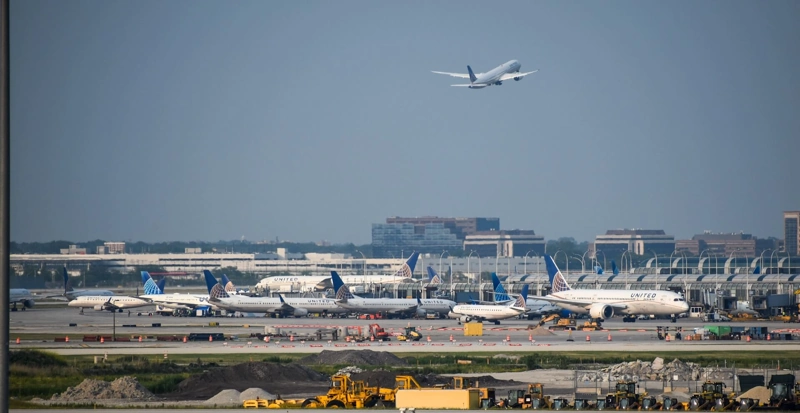
O’Hare vs Midway airport comparison is one of the first things almost every traveler searches before booking a flight to Chicago, and for good reason. The two airports aren’t interchangeable. One is a sprawling global hub with four terminals and nearly 280 destinations, and the other is a single-terminal, no-nonsense airport that’s a favorite with budget-conscious flyers and Southwest Airlines loyalists. At Windy City Limousine Chicago, we run transfers to both airports every single day, so we’ve got a pretty clear picture of how they actually compare once you get past the Wikipedia summary.
This guide walks through the real differences between O’Hare and Midway: size, terminals, airlines, distance from downtown, security wait times, parking, and which one makes more sense depending on whether you’re a business traveler, a family heading on vacation, or someone trying to save twenty minutes on a Tuesday morning commute to the gate.
O’Hare International Airport at a Glance
O’Hare International Airport (ORD) sits on the northwest side of the city and is, by most measures, one of the busiest airports on the planet. According to a 2026 announcement from the City of Chicago, O’Hare reclaimed its title as the world’s busiest airfield by aircraft operations in 2025, logging over 860,000 takeoffs and landings, roughly one every 37 seconds around the clock. It also ranked sixth globally by total passenger volume, with nearly 85 million travelers passing through in a single year.
O’Hare has four passenger terminals, numbered 1, 2, 3, and 5 (there’s no Terminal 4; the number was reserved early on and never used). United Airlines runs its largest domestic hub out of Terminal 1, American Airlines dominates the much larger Terminal 3, and Terminal 5 handles the bulk of international arrivals along with several domestic carriers. With service to nearly 280 destinations, O’Hare is the better pick if you need international routes, more frequent domestic options, or airline alliance flexibility.
Midway International Airport at a Glance
Midway International Airport (MDW) couldn’t feel more different the moment you walk in. It’s a single terminal with three connected concourses (A, B, and C), all reachable without leaving the secure side or re-clearing screening. That layout alone makes Midway one of the easiest airports in the country to navigate, especially compared to O’Hare’s sprawling, multi-terminal footprint.
Midway is Southwest Airlines’ busiest operating base in the country, with well over 200 daily departures and more than 90 percent of the airport’s total passenger traffic flying Southwest. It handles around 22 million passengers a year, making it Chicago’s second-busiest airport, and while it does offer a handful of international routes to Mexico and the Caribbean, it’s overwhelmingly a domestic, leisure-and-business-traveler airport rather than a global connecting hub.
Size and Layout: How the Two Airports Compare
This is where the contrast really shows up. O’Hare covers roughly 7,600 acres with nine concourses spread across four separate terminal buildings, three of which connect airside and one of which (Terminal 5) sits about a mile away and requires a shuttle or the free Airport Transit System people mover to reach.
Midway sits on a comparatively tiny 840-acre footprint with a single terminal and three concourses you can walk between freely. For travelers who get anxious about long terminal walks, tight connections, or simply finding their gate, Midway’s compact layout is a genuine advantage. O’Hare’s size cuts both ways: it gives you far more flight options and amenities, but it also means more walking, more signage to read, and a higher chance of a longer connection if you’re transferring between Terminal 1 and Terminal 3.
If you’ve got a tight connection booked through O’Hare, it’s worth checking your specific terminal-to-terminal walk before you fly. A same-terminal connection might take ten minutes, while crossing from Concourse L in Terminal 3 over to Terminal 1 can eat up half an hour or more once you account for security and walking distance. Midway sidesteps this problem almost entirely, since every gate sits within a few minutes of every other gate in the building.
Terminals and Airlines: Who Flies Where
If you already know your airline, this part is simple. At O’Hare, United flies out of Terminal 1, American out of Terminal 3, and a mix of carriers including Alaska, JetBlue, Air Canada, and Spirit operate from Terminal 2. Terminal 5 covers most international departures along with Delta, Southwest, and Frontier’s domestic flights.
At Midway, Southwest dominates Concourse A and a large share of Concourse B, while Delta, Frontier, Allegiant, and a handful of other carriers fill in the rest. If you’re flying Southwest, Midway is almost always going to be your airport. If you’re flying United, American, or need an international connection, O’Hare is typically the only real option.
Distance to Downtown Chicago and Travel Time
Midway has the clear edge here. It sits about 11 to 12 miles southwest of the Loop, and a direct drive in light traffic can take as little as 20 minutes. O’Hare is farther out, roughly 17 to 20 miles northwest of downtown, and a straightforward drive typically runs closer to 30 to 45 minutes depending on the route and time of day.
Both numbers can shift dramatically once Chicago traffic gets involved. Rush hour on the Kennedy Expressway heading toward O’Hare, or the Stevenson and Dan Ryan corridors near Midway, can easily double a normally quick trip. This is exactly why a chauffeur who already knows the alternate routes around both airports, and our Airport Transportation Chicago team certainly does, can make a bigger difference in your actual arrival time than the airport’s raw mileage from downtown ever will.
Getting to Downtown: CTA Blue Line vs. Orange Line
Both airports connect directly to downtown Chicago via the CTA “L” train system, which is a nice option if you’re traveling light and don’t mind public transit.
O’Hare connects via the Blue Line, with a station located on the lower level of Terminal 2’s parking garage. The ride downtown typically takes 40 to 45 minutes. Midway connects via the Orange Line, with a station right next to the terminal, and the trip downtown usually takes about 20 to 25 minutes, matching the airport’s shorter physical distance from the Loop.
The train is a reasonable choice if you’re solo, have minimal luggage, and aren’t pressed for time. It’s a much harder sell with multiple suitcases, kids in tow, or an early-morning flight where every minute of buffer matters.
Parking Options and Costs at Each Airport
Both airports offer hourly, daily, and economy parking, with shuttle buses connecting the economy lots to the terminals. O’Hare’s economy lots tend to require a longer shuttle ride simply because the airport’s footprint is so much larger. Midway’s economy lots are tighter to the terminal given the airport’s smaller overall size, which usually means a shorter wait for the shuttle.
Reserving parking in advance at either airport is worth doing during peak travel weeks, since both fill up during major holidays. That said, plenty of travelers skip the parking question entirely by booking a flat-rate transfer instead, which avoids the long-term parking fees altogether and removes the hassle of finding your car again after a week-long trip.
There’s also a cost angle worth mentioning. Long-term parking at either airport adds up fast over a five- or seven-day trip, often costing more in total than a round-trip car service would once you factor in the daily rate. For frequent flyers especially, comparing the two costs side by side before a trip is usually worth the five minutes it takes.
Security Lines and TSA Wait Times: Which Is Faster
Midway generally has the reputation for shorter security lines, mostly because it’s smaller and handles less overall traffic than O’Hare. That said, Midway’s lines can still stretch during peak Southwest departure banks, particularly early in the morning, so “smaller airport” doesn’t always mean “faster security” on a given day.
O’Hare’s checkpoints vary heavily by terminal. Terminal 5 and Terminal 3 tend to see the longest waits given the volume of international and American Airlines traffic passing through. Both airports support TSA PreCheck and CLEAR if you fly often enough to make either worthwhile, and both recommend arriving at least two hours before a domestic flight and three hours before an international one.
Winter weather adds another layer worth planning around at both airports. Chicago’s lake-effect snow and sub-zero cold snaps can cause de-icing delays and gate backups at either location, but O’Hare’s sheer flight volume tends to make winter disruptions ripple further and faster across its schedule. Midway’s smaller operation can recover from a weather delay a bit quicker simply because there are fewer flights competing for the same limited runway and gate space. If you’re traveling between November and March, building in extra buffer time isn’t optional at either airport, it’s just good planning.
International vs. Domestic Flights: Which Airport to Choose
This one’s straightforward. If you’re flying internationally, outside of a small number of routes to Mexico and the Caribbean from Midway, O’Hare is going to be your airport. It’s one of the most internationally connected hubs in the country, with dozens of international carriers and alliance partners operating out of Terminal 5.
If you’re flying a domestic route, especially on Southwest, Midway is often the faster, simpler option, assuming your destination is actually served from there. It’s worth checking both airports before booking if your travel dates are flexible, since price and route availability can vary more than people expect between the two.
Which Airport Is Better for Business Travelers?
It depends on what “better” means for your specific trip. O’Hare offers more frequent flights to more business hubs, better lounge access through United and American’s premium clubs, and more flexibility if your meeting schedule changes and you need to rebook quickly.
Midway wins on speed and simplicity for a fast in-and-out trip, especially if your destination is well served by Southwest and you want to minimize total travel time, from car to gate to landing. For executives who need door-to-door reliability regardless of which airport they’re using, our Executive Car Service Chicago handles both with the same level of punctuality and discretion.
Which Airport Is Better for Families and Leisure Travelers?
Families often lean toward Midway simply because the single-terminal layout is much easier to manage with kids, strollers, and extra luggage. Less walking and a more compact security area can make a real difference when you’re juggling a toddler and three bags.
That said, if your destination only flies out of O’Hare, or if you need an international connection, the slightly longer walk is a fair tradeoff. For larger families or groups who need extra room for luggage and car seats either way, our Luxury SUV Service Chicago fleet is built to make either airport feel less stressful from the moment you land.
Dining, Shopping, and Lounge Access
O’Hare’s sheer size translates into a much wider range of dining and retail options, and the quality varies noticeably by terminal. Terminal 1 has built a reputation for having some of the strongest food options at the airport, alongside the United Polaris Lounge and United Club locations. Terminal 3 carries the most concourses and gates, and with that comes the widest spread of restaurants, though it also means more walking if your gate is on the far end of Concourse L.
Midway’s single terminal keeps things simpler, with a solid lineup of Chicago-favorite restaurants and shops packed into a smaller footprint. It won’t match O’Hare’s sheer volume of options, but most travelers find everything they need within a short walk of their gate, and a few lounges are available for travelers who want a quieter spot before boarding.
Hotels and Layover Options Near Each Airport
Neither O’Hare nor Midway has a hotel directly inside the terminal, but the surrounding options look fairly different. O’Hare is surrounded by a dense cluster of airport hotels along Mannheim Road and the I-294 corridor, ranging from budget chains to full-service properties with shuttle service, which makes sense given the airport’s larger international traffic and longer layovers.
Midway’s hotel options are comparatively limited, with the closest properties roughly half a mile from the terminal and mostly falling in the two- to three-star range. If you’re looking for something more upscale near Midway, you’ll generally have better luck booking a hotel downtown and arranging transportation rather than staying directly next to the airport.
O’Hare vs. Midway: Quick Comparison Summary
To pull it all together in plain terms: O’Hare is bigger, busier, more internationally connected, and farther from downtown. Midway is smaller, simpler to navigate, closer to the Loop, and dominated by Southwest Airlines. Neither is universally “better.” The right choice comes down to your airline, your destination, and how much you value a shorter terminal walk versus more flight options.
If you fly internationally or need United or American specifically, O’Hare is your airport. If you’re flying Southwest domestically and want the fastest possible airport experience, Midway usually wins.
Ground Transportation: What Changes Between the Two Airports
Booking ground transportation looks slightly different depending on which airport you’re using, mostly because of layout and distance. At O’Hare, your pickup location depends heavily on which terminal you land in, and a chauffeur unfamiliar with the property can easily lose ten minutes just navigating between the curb and the correct terminal door. At Midway, the single-terminal design makes pickups far more straightforward, though the close-in suburbs surrounding the airport can still create traffic bottlenecks during peak hours.
This is exactly why working with a provider who treats every pickup as airport-specific, rather than a one-size-fits-all approach, matters. Whether you need a Black Car Service Chicago pickup at O’Hare’s Terminal 1 or a quick Midway transfer to a downtown hotel, knowing the property in advance is half the job.
Why Windy City Limousine Chicago Works Both Airports the Same Way
We didn’t build our reputation by specializing in one airport and treating the other as an afterthought. Our chauffeurs track flights and coordinate pickups at every terminal across both O’Hare and Midway, which means you get the same level of punctuality and professionalism no matter which one your flight uses.
Companies with employees flying through both airports regularly often set up a standing account through our Corporate Transportation Chicago program, which keeps billing simple and pickups consistent across every trip, regardless of which terminal or airline is involved. If that sounds like your team, our Corporate Transportation Chicago page walks through how it works.
Ready to Book Your Airport Transfer?
Whether you’re flying into O’Hare’s Terminal 5 or Midway’s Concourse A, lock in your pickup before you even board.
Reserve Your Airport Transfer Now
Have a question about which airport works best for your trip, or need a quick quote? Message our team directly.
Frequently Asked Questions
1. Which is bigger, O’Hare or Midway?
O’Hare is significantly larger, with four terminals spread across roughly 7,600 acres compared to Midway’s single terminal on about 840 acres.
2. Which airport is closer to downtown Chicago?
Midway is closer, sitting about 11 to 12 miles southwest of the Loop, compared to O’Hare’s 17 to 20 miles to the northwest.
3. Is Midway or O’Hare better for international flights?
O’Hare is the better choice for international travel, with dozens of international carriers operating out of Terminal 5. Midway offers only a limited number of international routes, mainly to Mexico and the Caribbean.
4. Which airport has shorter security lines, O’Hare or Midway?
Midway generally has shorter security lines due to its smaller size and lower overall passenger volume, though wait times at both airports vary by time of day and season.
5. Does Southwest Airlines fly out of O’Hare or Midway?
Southwest’s primary Chicago base is Midway, where it operates the majority of the airport’s daily flights, though it does offer a smaller number of flights from O’Hare’s Terminal 5 as well.
6. How long does it take to get from O’Hare to downtown Chicago?
By car, it typically takes 30 to 45 minutes depending on traffic. The CTA Blue Line takes about 40 to 45 minutes from the airport to downtown.
7. How long does it take to get from Midway to downtown Chicago?
A direct drive can take as little as 20 minutes in light traffic, and the CTA Orange Line covers the same trip in about 20 to 25 minutes.
8. Which airport is easier to navigate, O’Hare or Midway?
Midway is generally considered easier to navigate because of its single-terminal, three-concourse layout. O’Hare’s four separate terminals require more walking and, in Terminal 5’s case, a shuttle ride.
9. Is it cheaper to fly out of Midway or O’Hare?
Pricing varies by route and airline rather than the airport itself. Midway’s strong Southwest presence often means competitive fares on domestic routes, while O’Hare tends to offer more route options overall.
10. Can I book the same car service for both O’Hare and Midway?
Yes. A provider experienced at both airports, like Windy City Limousine Chicago, can handle pickups and drop-offs at either location with the same flat-rate pricing and flight-tracking process.
Final Thoughts
There’s no universally “correct” answer in the O’Hare vs Midway debate, just the right answer for your specific trip. O’Hare gives you scale, international reach, and more flight options. Midway gives you simplicity, speed, and a shorter drive from downtown. Once you know your airline, your destination, and how much terminal walking you’re willing to put up with, the choice usually makes itself.
The good news is that the ground transportation side of the equation doesn’t have to be part of the decision at all. Once you’ve picked your flight, the rest of the trip, from touchdown to your front door, should feel exactly the same regardless of which airport you land at.
Whichever airport your flight uses, Windy City Limousine Chicago will be waiting at the curb when you land.