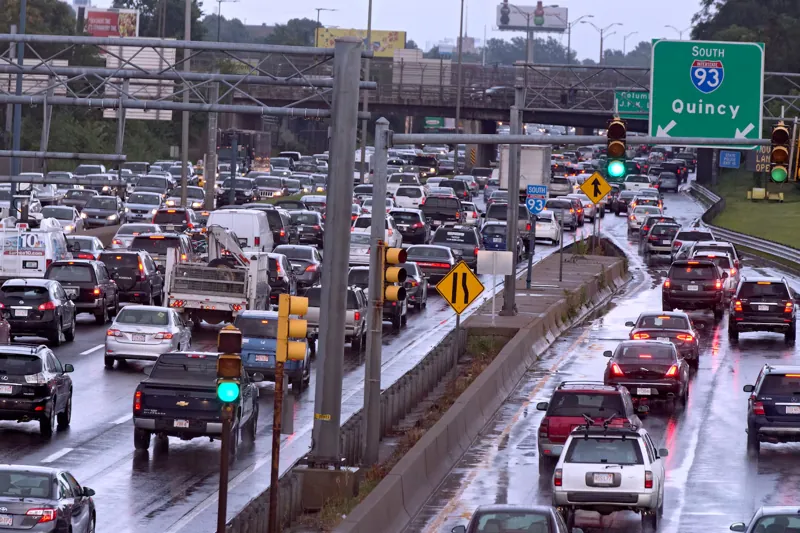
Rush Hour In Boston is more than just a period of high traffic volume; it is a legendary test of patience that defines the daily rhythm of New England’s largest city. For residents and visitors alike, understanding the nuances of the “Beantown crawl” is essential for making it to a flight at Logan Airport or a business meeting in the Financial District. While planning your travels across the country, you might rely on the precision of windy city limousine chicago to handle the busy streets of the Midwest, and you should demand that same level of logistical expertise when facing the tangled web of Massachusetts highways. Boston is a city built on a 17th-century footprint, which means its roads were never designed for the 21st-century car volume it currently faces.
In 2024, data from Inrix revealed that Boston remains the 4th most congested city in the United States, trailing only behind New York, Chicago, and Los Angeles. On a global scale, it ranks 12th, with the average commuter losing approximately 79 hours per year to gridlock. That is over three full days of your life spent staring at the tail lights of the car in front of you. This Rush Hour In Boston guide is designed to help you reclaim your time by understanding exactly when, where, and how the traffic flows.
Understanding the Timing: When is Rush Hour In Boston?
If you are trying to time your commute, you need to know that Rush Hour In Boston doesn’t just last for an hour. It is a sustained window of congestion that stretches across the morning and evening.
The Morning Surge (6:00 AM – 10:00 AM)
The morning commuter delays typically begin earlier than in many other major cities. By 6:30 AM, the major arteries like I-93 and the Mass Pike (I-90) are already starting to fill. The absolute peak typically occurs between 7:30 AM and 9:00 AM. If you are heading into the city for an 8:00 AM meeting, leaving at 7:00 AM might already be too late.
The Afternoon Gridlock (3:00 PM – 7:00 PM)
The evening Rush Hour In Boston is notoriously worse than the morning. It begins as early as 3:00 PM as schools let out and early-shift workers head home. The peak congestion usually hits between 4:30 PM and 6:00 PM. During this window, travel times can easily triple compared to off-peak hours.
The Midweek Peak: Tuesday Through Thursday
In the post-pandemic era of hybrid work, the days of the week matter significantly. Mondays and Fridays have become relatively manageable. However, Tuesdays, Wednesdays, and Thursdays see the highest volume of traffic congestion. These are the days when nearly the entire workforce is in the office, leading to a much more intense Rush Hour In Boston experience.
The Worst Offenders: Busiest Roads and Hotspots
To navigate effectively, you must know which roads to avoid. Certain stretches of pavement in Boston are infamous for being “parking lots” during peak times.
-
I-93 Southbound (The Central Artery): This is arguably the most congested road in America. Specifically, the stretch between the Zakim Bridge and the Pilgrims Highway interchange is a nightmare. Even after the multi-billion dollar “Big Dig” project moved the highway underground, the sheer volume of traffic exceeds the tunnel’s capacity every single day.
-
Storrow Drive: A scenic but frustrating route that runs along the Charles River. It is famous not just for its traffic, but for “Storrowing”—a local term for when a moving truck ignores the low-clearance height signs and gets stuck under a bridge, shutting down the road for hours.
-
The Massachusetts Turnpike (I-90): Known as “The Pike” by locals, this toll road funnels commuters from the western suburbs into the city. The area around the Allston/Brighton tolls (now electronic) remains a significant chokepoint.
-
Sullivan Square (Charlestown): This complex rotary connects I-93, Route 99, and Route 38. It is a classic example of Boston’s difficult road design, where multiple lanes of traffic converge in a confusing, high-stakes circle.
-
Route 1 Northbound (Gillette Stadium Area): While not in the city center, this road becomes a total standstill during New England Patriots home games. Speeds often drop to a mere 12 mph, making game day travel a major logistical hurdle.
The Economic Impact of Boston Traffic
Sitting in a Rush Hour In Boston jam isn’t just a mental drain; it is a financial one. According to economic reports, the average Boston driver loses about $1,414 annually in wasted fuel and lost productivity. For businesses that rely on logistics and delivery, these delays translate to millions of dollars in increased operational costs. This is why many corporate executives have shifted toward using chauffeured services; it allows them to turn a 60-minute traffic jam into a productive 60-minute office session in the back of a luxury sedan.
Traffic Safety and the “Vision Zero” Initiative
Boston has a complex relationship with road safety. The city has averaged about 1,900 serious or fatal crashes annually over the last decade. In response, the city government committed to Vision Zero, a program designed to eliminate traffic-related fatalities and serious injuries by 2030.
As a result, you will see many recent changes in the city’s infrastructure, such as:
-
Lowered Speed Limits: Many city streets have been reduced to 25 mph.
-
Dedicated Bike Lanes: Significant portions of the road have been reclaimed for cyclists, which, while safer, has narrowed the lanes available for cars.
-
Enhanced Pedestrian Zones: Specifically in the Seaport District and the North End, pedestrian safety is prioritized, often leading to slower vehicle movement.
Insider Tips for Beating the Rush
To survive a Rush Hour In Boston, you need to think like a local. Here are a few strategies to minimize your time on the road:
-
Avoid the “Rotary Logic”: If you are not familiar with New England rotaries (roundabouts), avoid them during peak hours. They can be aggressive and confusing for outsiders.
-
Check the Calendar: Boston is a college town. “Move-in Day” (typically September 1st) is a day when you should stay off the roads entirely, as thousands of students and parents clog the narrow streets with moving vans.
-
Monitor the Weather: A light dusting of snow in Boston can turn a standard 40-minute commute into a three-hour ordeal.
-
Use Reverse Commuting: If you are staying in the city but working in the suburbs (like the tech corridor on Route 128), you are “reverse commuting.” This is generally much faster, as you are moving against the main flow of traffic.
The Solution: Navigating Boston Smoothly
Let’s be honest: no one enjoys driving through Rush Hour In Boston. Between the “Massholes” (a term of endearment for aggressive local drivers), the confusing one-way streets, and the constant construction, it is an exhausting experience. The best way to handle it is to take yourself out of the driver’s seat.
By choosing a professional ground transportation provider, you eliminate the stress of navigation and parking. Whether you are heading to Logan International Airport or navigating between meetings in the Back Bay, a professional chauffeur knows the shortcuts that GPS apps often miss. You can relax in a climate-controlled environment, catch up on emails, or simply enjoy the view of the Zakim Bridge without worrying about the brake lights in front of you.
If you want to experience the same level of luxury and reliability that you find with windy city limousine chicago, it’s time to book a ride that understands the heartbeat of Boston. Don’t let the traffic dictate your schedule.
Make your reservation here to secure a seamless, stress-free journey through the streets of Boston.
10 Frequently Asked Questions (FAQs) About Rush Hour In Boston
1. What time is the absolute worst for traffic in Boston?
The most intense period for Rush Hour In Boston is usually Wednesday afternoon between 4:30 PM and 5:30 PM.
2. How long does it take to get from Logan Airport to Downtown during rush hour?
While it’s only about 3 miles, during peak Rush Hour In Boston, it can take 45 to 60 minutes. Off-peak, it usually takes only 10-15 minutes.
3. Is it better to take the “T” (Subway) than to drive?
The “T” is often faster for traveling within the downtown core, but for reaching suburbs or carrying luggage, a private car is far more convenient.
4. Why is Friday afternoon traffic so bad in the summer?
In the summer, Friday afternoon Rush Hour In Boston starts as early as 1:00 PM because residents are fleeing the city for Cape Cod and the islands.
5. Are there HOV (High Occupancy Vehicle) lanes in Boston?
Yes, there is a prominent HOV lane on I-93 North of the city (the “Zipper Lane”) and South of the city to help speed up carpools and buses.
6. What is “Storrowing”?
It is when a driver takes a tall truck or van onto Storrow Drive and hits one of the low bridges. This is common in late August/early September and causes massive traffic delays.
7. Is parking expensive in Boston?
Yes, parking in the Financial District or Back Bay can cost
40−60 per day. This is another reason many choose a chauffeur service over driving themselves.
8. Does Boston have toll roads?
The Massachusetts Turnpike (I-90) is a major toll road. All tolls are electronic (EZ-Pass), so there is no stopping to pay cash.
9. How does snow affect the rush hour?
Snow significantly slows down Rush Hour In Boston. The city is good at plowing, but the narrow streets and icy patches on the Zakim Bridge often cause accidents and long delays.
10. What is the most reliable way to get to a 6:00 PM dinner in the North End?
Pre-booking a car service is the most reliable method. The North End has virtually no public parking, and traffic on Commercial Street is consistently heavy.